It keeps sewage out of the house
When a tank fills up with solids, wastewater has fewer places to go. It can end up coming back through tubs, showers and floor drains.
Septic maintenance · Bryan, TX
Regular pumping keeps solids in the tank and out of your drainfield. Here's what it involves and how often it typically needs doing.
Mon–Fri, 7 a.m. to 6 p.m.
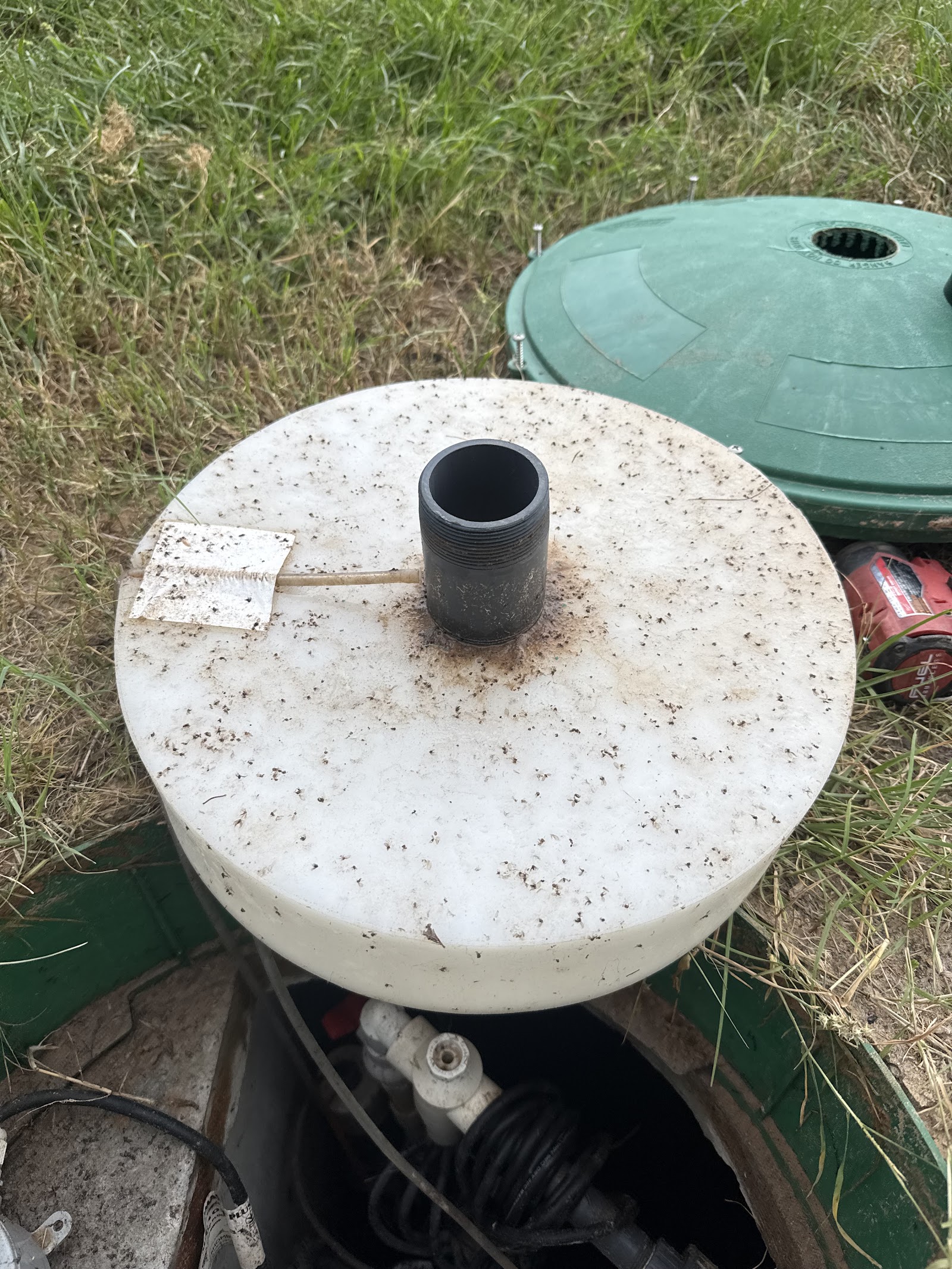
Everything that goes down your drains ends up in the septic tank. Inside, it separates. Heavy solids sink and form a layer of sludge on the bottom. Grease and lighter material float up as scum. The liquid in the middle flows out to the drainfield, where the soil finishes treating it.
Bacteria in the tank break down some of those solids, but never all of them. Over time the sludge and scum layers get thicker and the tank has less room to work. Pumping takes out the liquid along with the settled solids and the scum, so the tank has room to do its job again.
A tank that's pumped on schedule is a tank you mostly don't think about. One that isn't tends to remind you at the worst time.
When a tank fills up with solids, wastewater has fewer places to go. It can end up coming back through tubs, showers and floor drains.
If sludge and scum build up far enough, solids can wash out of the tank and into the drainfield lines, where they clog the soil. A failed drainfield is one of the biggest repairs a system can need.
An open, empty tank is the easiest time to see what's going on inside it. Small issues found during routine pumping are usually simpler to deal with than the ones that announce themselves with a backup.
Most visits follow the same order. Knowing it ahead of time helps you get the yard ready.
The tank access is located. It goes faster if you know roughly where it is or have a diagram from when the system went in.
Lids or risers are uncovered and opened. Lids that are buried may take some digging to reach.
The tank is pumped, taking out the liquid along with the settled sludge and the scum layer.
With the tank open and empty, it can be checked for problems such as cracks or damaged baffles before it's closed back up.
Pumping handles the big stuff. These habits help between visits.
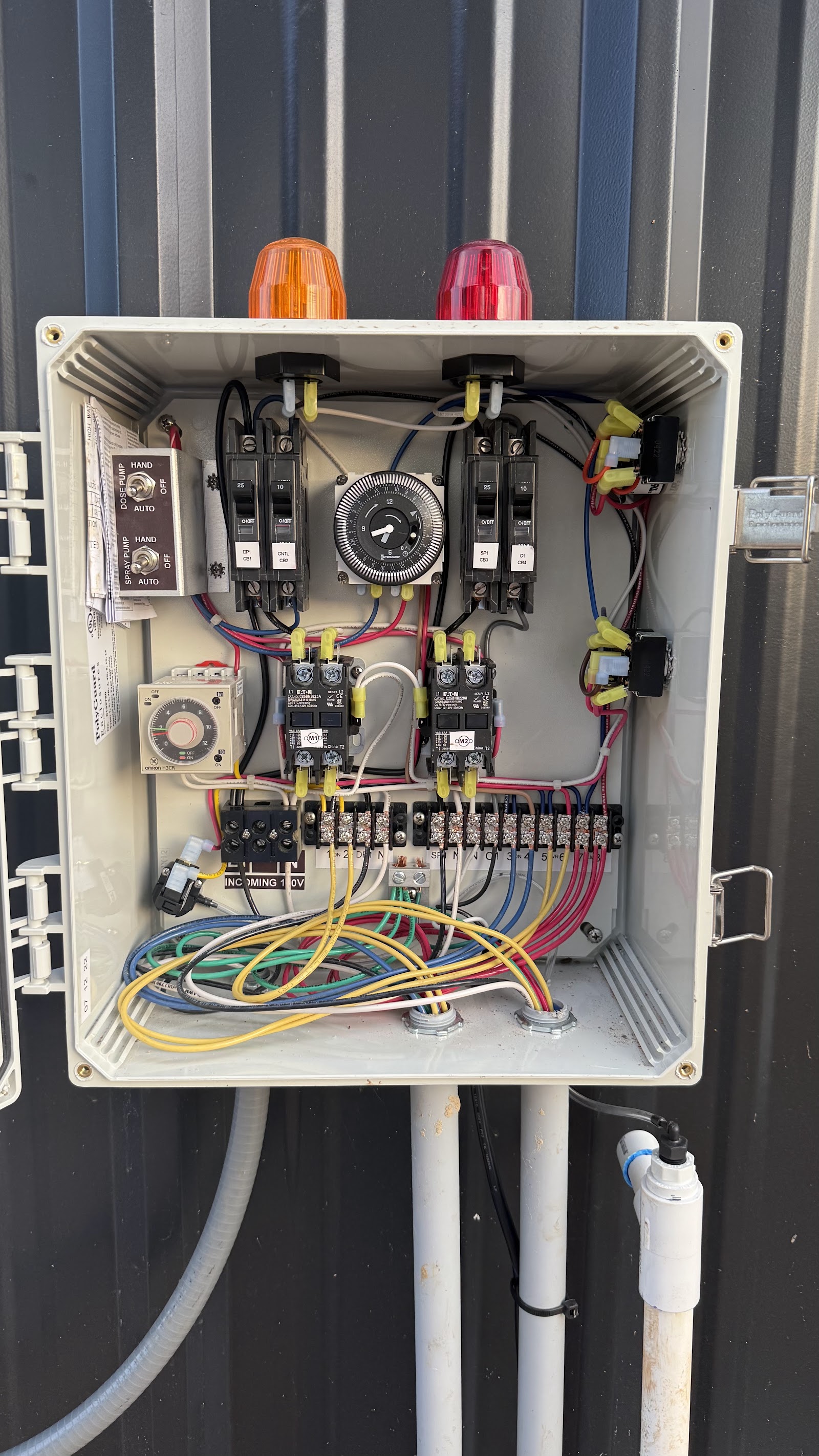
EPA says systems with pumps, float switches or other mechanical parts, such as aerobic systems, should be inspected about once a year. A standard household system should be inspected at least every 3 years.
There isn't one number that fits every house. EPA guidance is that household tanks are typically pumped every 3 to 5 years, and TCEQ, which oversees septic systems in Texas, recommends the same range.
Where your home falls depends on tank size, how many people live there, how much water you use and how much solid waste goes down the drains. A big household on a small tank will need it sooner than a couple on a large one. If you don't know when your tank was last pumped, give us a call and ask what makes sense for your place.
A proper pump-out removes the liquid along with the sludge settled on the bottom and the scum floating on top, from every compartment of the tank. The sludge is the part that matters most.
Skimming off only the liquid leaves the solids behind, so the tank fills back up quickly and the drainfield stays at risk. If you want to know exactly what your visit will cover, ask when you call.
If you can't remember the last time, that's usually a good sign it's time. Call and we'll get it on the calendar.